Posts

How to build a digital marketing culture in your company?

Image
Very often, in my early jobs working in advertising agencies, I’ve experienced how both organisations (the agency and the clients) seems to be suffering from digital marketing deficit. From an agency perspective, digital, was viewed as a medium to propagate the communication proposition. For the client, digital was a box to be ticked, in their marketing checklist. In industry forums and workshops, I used to discuss (and also hear) with my peers and speakers about ‘the lack of digital marketing strategy’ or ‘not have a strategic view of digital’ etc… and the scenario is no different, even today. The problem, i’ve identified, is not about strategy but lack of ‘digital marketing culture’ in organisations. Thanks to technology and the connected world, marketing is no longer a prerogative for a bunch of people working in a specific department or of outside consultants/vendors working for them. It is something that each and every one in the organisation can participate in. By Digital M...

The superficiality of what we search

Image
Recently, I saw a query in a LinkedIn group asking “what are 2 powerful marketing phrases/words that sell?”. What made me curious was not the answers but the nature of the question, the keyword being “what”.  Internet happens to be the default place where people go for information gathering. The age old principle of information gathering is asking the Five Ws and one H - Who, What, Where, When, Why, and How. Getting the most popular response - Wisdom of crowd, or Conformity to existing belief is the solution (information) that we subconsciously look for is what we ultimately click on as part of search results. Did a quick search on the popular Ws on Google trends for the past decade, and something interesting but on expected lines turned out. Below is the image of the same: Looking at the popularity of search by ‘what’ clearly indicates that a lot of things are unknown to lot of people. It also indicates that most people are superficial in terms of what they sea...

Why we will soon own a second mobile phone

Image
There are more than 4.5 Billion mobile users in the world. That is almost 60% of the world population. While the stats and market forecasters might predict a plateau in terms of the mobile sales, I think that the next billion in mobile sales will come from existing users picking up a second mobile phone. I observe that many of my friends and relatives have already started carrying a second mobile phone. The common reason they give is that one is  the ‘official’ phone and the other is ‘personal’. (Note: ‘Official’ does not mean that it is a company owned phone). Meaning,  that the first phone is for all and sundry stuff like browsing, data, etc and the second number for calls and to be shared with important people. This behaviour is pretty similar to what most of us had experienced or done with an earlier technology innovation - Emails When Hotmail started offering free web based email IDs and later Gmail with their unlimited storage, everyone who was online quick...

Physics & Digital Marketing- Part 2; Doppler Effect

Image
The simple premise of doppler effect is that the frequency and velocity of a wave varies depending on the distance between the source and receiver. Imagine, Social media as a huge lake and all the brands and people are floating on it. Each conversation is an action that starts a ripple and the same can be felt in the area of influence surrounding the source. The intensity of the wave changes depending on the distance between the source and observer or in this case the receiver. The frequency of the wave being higher when the distance between the sender and observer is near (or coming closer) and lower when the distance is far or receding. In a digital marketing scenario, when an user starts a conversation involving a brand, depending on the frequency of the conversation, we can judge whether the user is coming closer to the brand or receding away from it. Here we have to negate the type of conversation (positive, neutral, or negative). The following scenarios could be played ou...

Physics & Digital Marketing: Part 1. Path of Least Resistance

Image
P hysics has been one of my favourite subject since school days. Thanks to an uncle of mine who gifted me couple of Russian books (english translated) called Physics for Entertainment by Y. Perelman. Digital marketing is a passion that I’ve been pursuing in my professional life. We all know that the underlying aspect of any digital marketing is a combination of technology and principles of marketing. I see many instances where the laws of physics are very much in play when it comes to digital marketing User Experience (UX), as popularly defined, is improvement of accessibility, usability, and satisfaction of any design. In digital space, it is mostly defined by the designs of website or an application (including widgets, apps, games, etc) Path of least resistance, according to physics, is termed as the perceived pathway a forward motion object will take from a set of alternatives. The principle behind it is that the object will always take the path that has least resistance...

Idea born out of Maggi fiasco

Image
This is a Pulse post that I've written earlier in the day Maggi, the 2 minute wonder, from Nestle, has got its 15 minutes of fame...though for wrong reasons. I trust Nestle, as a company, and have faith that if the product did have toxic substance beyond permissible limits, it was by pure mischance.  This post is not in support of Maggi (or Nestle) nor it is to slander them for what happened. There are many more who are more competent than me to talk about it. In fact, as I write this post, Maggi is going for a huge PR exercise to minimise the damage and improve its image.  Being a digital marketer, I generally look at various opportunities and events from the prism of technology and marketing. Is there a value or customer need that the product can satisfy? Is there a marketing opportunity here? Can technology play a role in the same?, etc are few questions, I try to answer. This post is about a marketing idea that came out from watching th...

Future Trends: 3D printing and crowdsourced manufacturing

Image
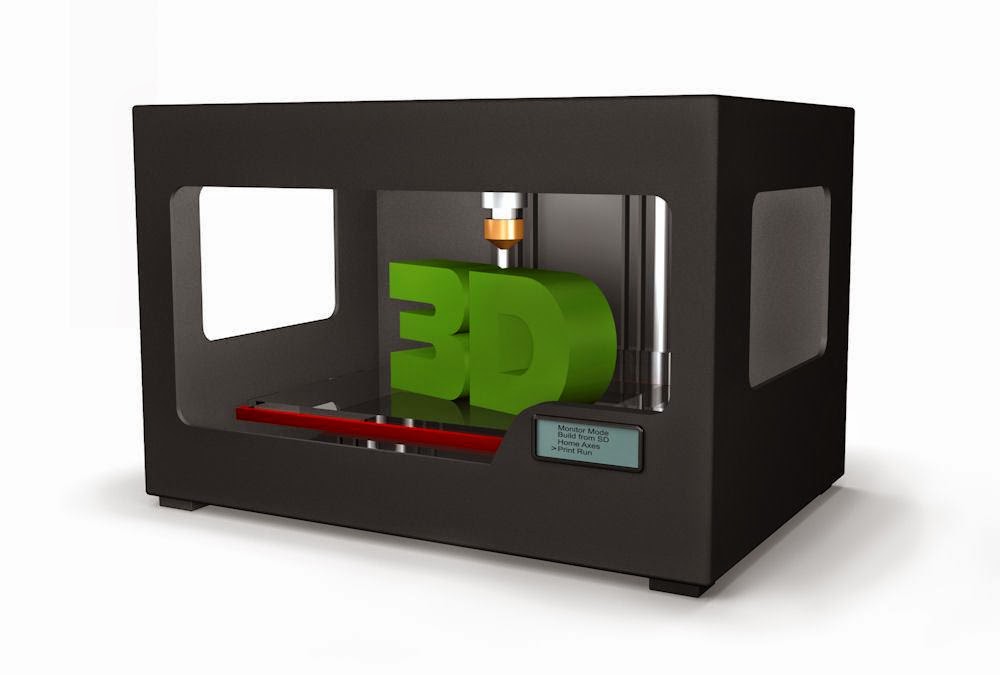
Manufacturing sector has always been the main driver for economic growth and creation of wealth. Be it large industries or SMEs, they have a direct association in creating more jobs and allied services. One of the biggest concerns with manufacturing has always been that it is very resource-intensive. The factories need to be built near to raw material access. They are capital heavy to start. Logistics and distribution plays a crucial role in terms reach and cost.  The advent of 3D printing technology will change the manufacturing/production model as we know now. Manufacturing might get crowd sourced. In the future, hundreds and thousands of small players (most working from home) will start making different components in small quantities and the same will be collected by the companies and assembled as the final product. Imagine, a manufacturer of Air Conditioners. Except for the crucial components, say compressor, the other parts, like the body, blower, circuit board, et...